
Home › Practice tests › Tanker
Tanker CDL Practice Test
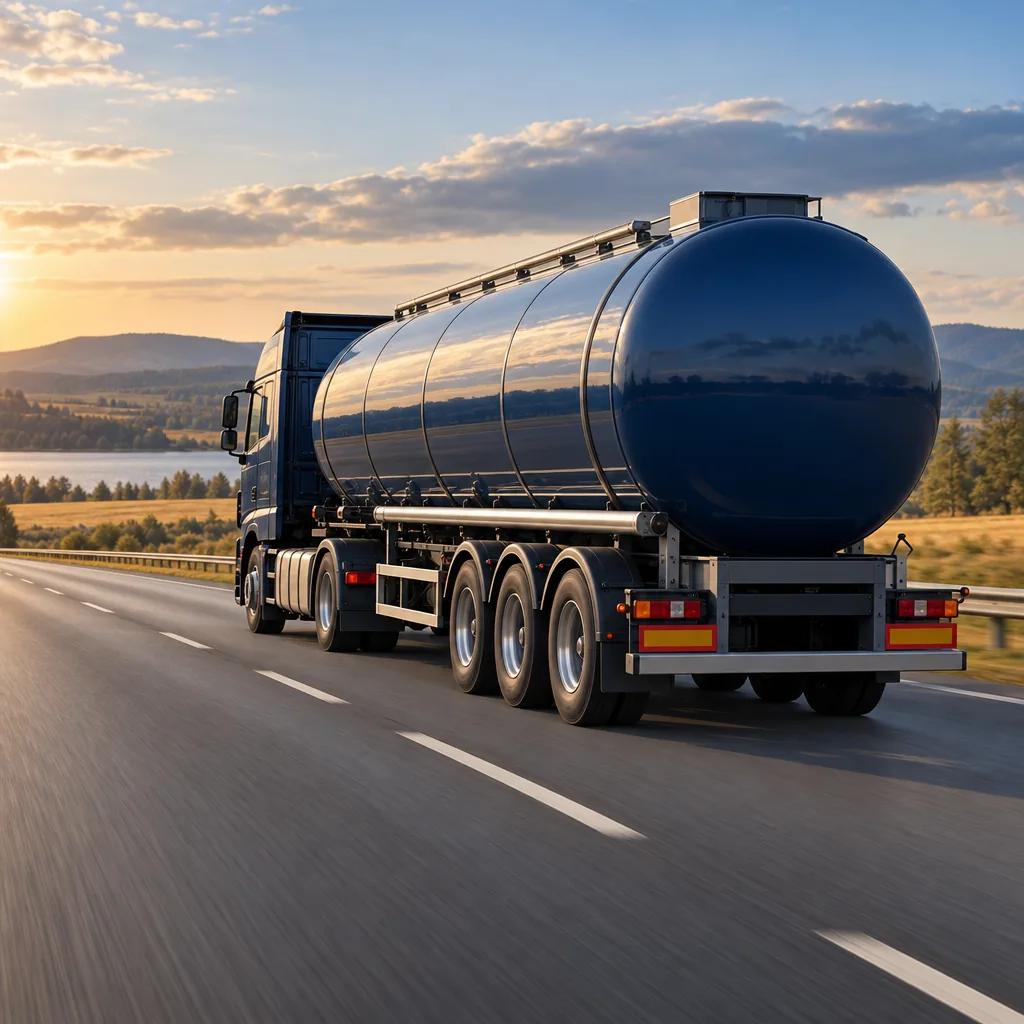
The Tanker endorsement is required to operate any commercial motor vehicle designed to transport liquid or gaseous materials in tanks of 1,000 gallons or more. Topics cover surge, baffles, smooth-bore tanks, top loading and bottom loading, outage allowances, high center of gravity, slosh control, turning and braking dynamics with liquid loads, and accident response.
Ready to test yourself? Take a free scored practice test in this category, or mix in all 500 questions.
Why this test exists
Liquid surge can push a vehicle through an intersection or roll it on a curve. The Tanker endorsement specifically addresses how unbaffled and partially full tanks behave differently from rigid loads.
How to study this section
Know the difference between baffled, unbaffled, and compartmented tanks, the safe outage percentage for liquid expansion, and why front-to-back surge is more dangerous than side-to-side surge.
63 practice questions
- Q1. The Tanker (N) endorsement is required when transporting liquids or gases in a tank with a rated cap…
- Q2. The biggest handling challenge with liquid loads is:
- Q3. A 'baffle' inside a tank is:
- Q4. A 'smooth bore' tanker has:
- Q5. The greatest surge danger in a smooth-bore tank is:
- Q6. Outage refers to:
- Q7. Top loading vs. bottom loading: top loading creates:
- Q8. When loading flammable liquids, you must:
- Q9. Driving with a partially full liquid tank requires:
- Q10. Compartmented tanks help control surge by:
- Q11. A high center of gravity makes a tanker:
- Q12. When entering a curve in a loaded tanker, you should be at safe speed:
- Q13. Empty tanks need:
- Q14. The safest spacing between trucks in a convoy of liquid tankers is:
- Q15. The relief valve on a cargo tank protects against:
- Q16. Liquid surge can:
- Q17. The maximum legal weight on a steering axle of most tankers is set by:
- Q18. When checking tank closures (manhole covers, vents), you should:
- Q19. A 'pumper' tank truck is:
- Q20. The right gear before descending a grade with a liquid load is:
- Q21. The 'two-thirds rule' for loading flammable liquids is:
- Q22. A non-baffled tanker should be driven with:
- Q23. You should keep what kind of distance behind a tanker truck:
- Q24. When approaching a curve with a tanker, the rollover speed:
- Q25. The most common cause of tanker rollovers is:
- Q26. When a tanker driver loses control on a curve, the tanker:
- Q27. A loaded tanker that begins to skid in a curve should:
- Q28. Compatibility of liquids in a multi-compartment tank requires:
- Q29. Vapor recovery during loading prevents:
- Q30. The first rule when starting a downhill grade with liquid is:
- Q31. Bottom loading reduces:
- Q32. Cargo tank pressure relief vents must:
- Q33. You should perform the air brake leak-down test on a tanker:
- Q34. Liquid level inside a tank can be:
- Q35. When unloading product, the driver must:
- Q36. Tank truck rollovers most often occur during:
- Q37. Stopping distance for a loaded tanker is:
- Q38. You should never:
- Q39. When approaching a curve in a tanker, you should:
- Q40. A tank with a recent product change should:
- Q41. A driver of a placarded tanker must inspect tires:
- Q42. The kind of skid hardest to recover from in a tanker is:
- Q43. A foam dam in a tanker is used in:
- Q44. Loading flammable liquids: the engine should be:
- Q45. Speed adjustment on a wet road for a tanker:
- Q46. A 'dry break' coupling is:
- Q47. A vapor barrier on a tanker keeps:
- Q48. The 'volume expansion' of a typical liquid hydrocarbon per 10°F warmth is approximately:
- Q49. Pressure inside a sealed tanker rises with:
- Q50. A tanker driver should treat 'empty' tanks as:
- Q51. When you arrive at a delivery, the first thing you do is:
- Q52. When discharging at a customer site, the proper grounding/bonding sequence is:
- Q53. The most dangerous moment in a tanker rollover sequence is when:
- Q54. When transporting two products that produce a violent reaction if mixed, you should:
- Q55. Surge effects on braking can:
- Q56. A driver checking tanker emergency equipment must verify:
- Q57. Tank vent operation should be inspected:
- Q58. When transporting cryogenic liquids, special concerns include:
- Q59. A driver suspecting a leak should:
- Q60. The tanker driver responsibility at unloading completion:
- Q61. Carbon monoxide buildup in compartments is a concern when:
- Q62. A loaded tanker that strikes a low overhang causing a roof leak:
- Q63. Driver fatigue in tanker operations is a special concern because:
State-specific resources
Each U.S. state administers the CDL knowledge test through its own DMV. The federal questions are the same; the test scheduling, fees, and identification requirements vary. Start with your state's overview:
Alabama
Tanker questions tailored for Alabama drivers.
Alaska
Tanker questions tailored for Alaska drivers.
Arizona
Tanker questions tailored for Arizona drivers.
Arkansas
Tanker questions tailored for Arkansas drivers.
California
Tanker questions tailored for California drivers.
Colorado
Tanker questions tailored for Colorado drivers.