
Why this matters in Colorado
Colorado emphasizes mountain driving, runaway ramps, and brake fade in its CDL knowledge curriculum. If you are pursuing the Tanker portion of the Colorado CDL exam, the Colorado Division of Motor Vehicles will use the same federal core questions you practice here, plus any state-specific items the Colorado Division of Motor Vehicles chooses to include.
What you will learn
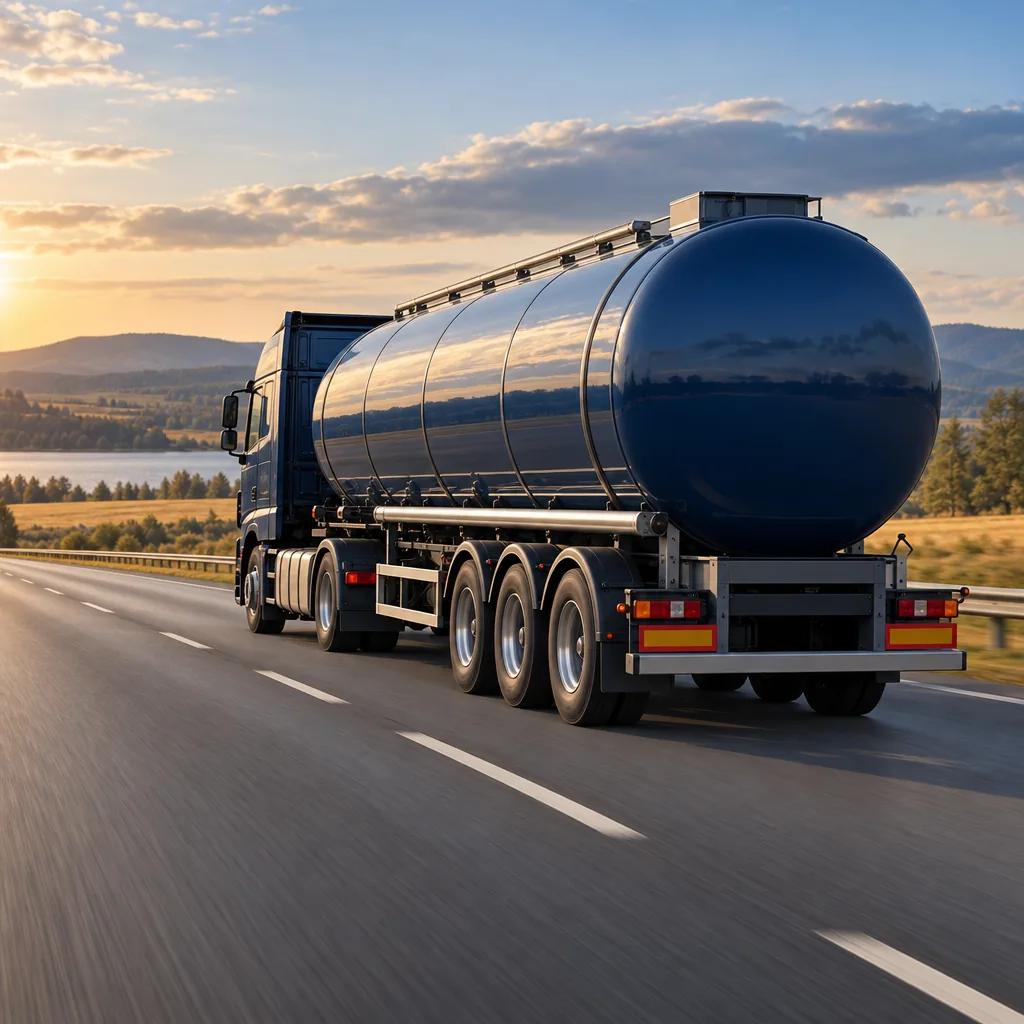
The Tanker endorsement is required to operate any commercial motor vehicle designed to transport liquid or gaseous materials in tanks of 1,000 gallons or more. Topics cover surge, baffles, smooth-bore tanks, top loading and bottom loading, outage allowances, high center of gravity, slosh control, turning and braking dynamics with liquid loads, and accident response.
Sample questions
- Q1. The Tanker (N) endorsement is required when transporting liquids or gases in a tank with a…
- Q2. The biggest handling challenge with liquid loads is:
- Q3. A 'baffle' inside a tank is:
- Q4. A 'smooth bore' tanker has:
- Q5. The greatest surge danger in a smooth-bore tank is:
- Q6. Outage refers to:
- Q7. Top loading vs. bottom loading: top loading creates:
- Q8. When loading flammable liquids, you must:
- Q9. Driving with a partially full liquid tank requires:
- Q10. Compartmented tanks help control surge by:
- Q11. A high center of gravity makes a tanker:
- Q12. When entering a curve in a loaded tanker, you should be at safe speed:
- Q13. Empty tanks need:
- Q14. The safest spacing between trucks in a convoy of liquid tankers is:
- Q15. The relief valve on a cargo tank protects against:
- Q16. Liquid surge can:
- Q17. The maximum legal weight on a steering axle of most tankers is set by:
- Q18. When checking tank closures (manhole covers, vents), you should:
- Q19. A 'pumper' tank truck is:
- Q20. The right gear before descending a grade with a liquid load is:
- Q21. The 'two-thirds rule' for loading flammable liquids is:
- Q22. A non-baffled tanker should be driven with:
- Q23. You should keep what kind of distance behind a tanker truck:
- Q24. When approaching a curve with a tanker, the rollover speed:
- Q25. The most common cause of tanker rollovers is:
Colorado test logistics
The Colorado Division of Motor Vehicles charges a permit fee of $16.80 and a license fee of $26.80. The minimum age is 18 (intrastate) / 21 (interstate). Schedule your knowledge test through the Colorado Division of Motor Vehicles once you can score above 90% on this site's practice bank.