
Home › Practice tests › Hazardous Materials (Hazmat)
Hazardous Materials (Hazmat) CDL Practice Test
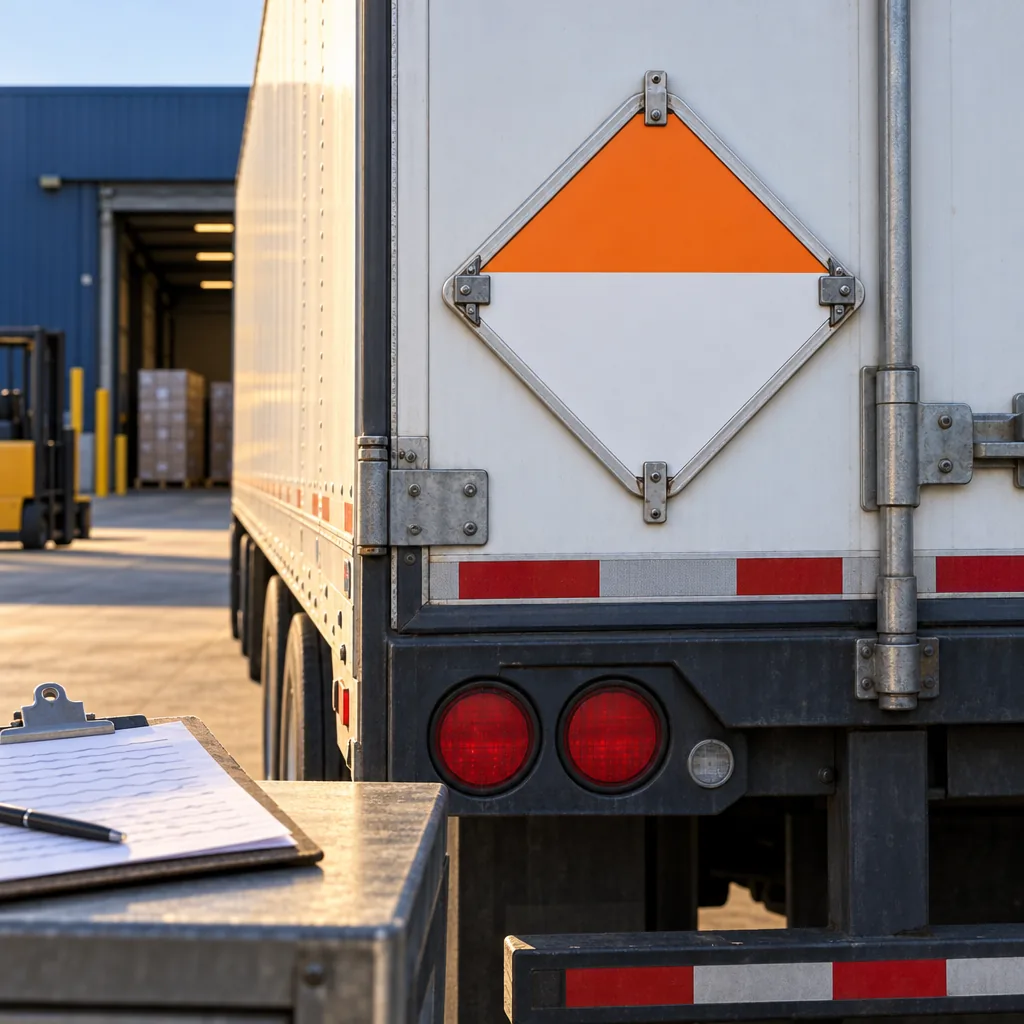
The Hazmat endorsement is required to transport materials in quantities requiring placards under 49 CFR 172.504. Topics include hazard classes, the Hazardous Materials Table, shipping papers, marking, labeling, placarding, segregation, loading and unloading, communication rules, emergency response, security plans, and the Transportation Security Administration (TSA) background check.
Ready to test yourself? Take a free scored practice test in this category, or mix in all 500 questions.
Why this test exists
Mishandled hazmat causes catastrophic public consequences. The endorsement is restricted, requires fingerprint background screening through the TSA, and demands deeper familiarity with regulatory paperwork than any other CDL endorsement.
How to study this section
Master the Hazardous Materials Table columns, know the placarding thresholds, and learn which classes can never be loaded together. Practice locating UN/NA identification numbers and understanding the segregation chart.
64 practice questions
- Q1. The Hazardous Materials Regulations are found in:
- Q2. The Hazardous Materials Table (HMT) is found in:
- Q3. A 'placard' on a hazmat vehicle is:
- Q4. For most hazardous materials, placarding is required when:
- Q5. Some hazardous materials require placards in any quantity. These are listed in:
- Q6. The Emergency Response Guidebook (ERG) is intended for use by:
- Q7. Shipping papers for hazmat must:
- Q8. A shipping paper for hazmat must include:
- Q9. Hazmat ID numbers begin with:
- Q10. A 'segregation' rule means:
- Q11. A driver must inspect tires of a placarded hazmat vehicle:
- Q12. A hazmat driver must hold a:
- Q13. The TSA threat assessment for the hazmat endorsement is required:
- Q14. The driver must be familiar with the contents of the:
- Q15. Class 1 hazardous materials are:
- Q16. Class 2 hazardous materials are:
- Q17. Class 3 hazardous materials are:
- Q18. Class 4 hazardous materials are:
- Q19. Class 5 hazardous materials are:
- Q20. Class 6 hazardous materials are:
- Q21. Class 7 hazardous materials are:
- Q22. Class 8 hazardous materials are:
- Q23. Class 9 hazardous materials are:
- Q24. When fueling a placarded vehicle:
- Q25. Smoking is prohibited within how many feet of a placarded vehicle (with certain exceptions)?
- Q26. When a hazmat shipment requires routing avoidance, drivers must:
- Q27. A driver discovering a leak in a hazmat shipment should:
- Q28. The CHEMTREC emergency phone number is:
- Q29. A 'cargo tank' is:
- Q30. When parking a placarded hazmat vehicle, you generally may not park within:
- Q31. Class 1 explosive vehicles must be attended:
- Q32. The shipping paper for a hazmat shipment must be:
- Q33. A bill of lading for hazmat must be marked with:
- Q34. The 'HM' column on a shipping paper is used to:
- Q35. A 'reportable quantity' (RQ) on a shipping paper means:
- Q36. When transporting Class 7 radioactive materials, you may need to track:
- Q37. Hazmat training of CDL drivers must be:
- Q38. The 'security awareness' training for hazmat covers:
- Q39. When checking placards before driving, you should verify:
- Q40. A 'subsidiary risk' label indicates:
- Q41. Under what condition can a driver leave a hazmat vehicle unattended?
- Q42. Hazmat tanker drivers must check tank closures (manhole covers, valves):
- Q43. Loading hazmat into a vehicle requires:
- Q44. You may not transport packages of hazmat with what other items?
- Q45. A hazmat 'incident report' must be filed when:
- Q46. The National Response Center number is:
- Q47. A 'Dangerous' placard may be used in place of separate placards for non-bulk shipments containing tw…
- Q48. When a load is placarded 'Dangerous,' it cannot include over how many pounds of any single category …
- Q49. A driver should refuse a leaking package because:
- Q50. The 'special permit' on a shipping paper indicates:
- Q51. Marking refers to:
- Q52. Labeling refers to:
- Q53. When the hazmat is also a 'marine pollutant':
- Q54. A 'cylinder' of compressed gas requires:
- Q55. The 'Hazardous Substances' RQ values are listed in:
- Q56. When loading explosives, the cargo space must be:
- Q57. The driver of a hazmat vehicle in transit must:
- Q58. When transporting Class 1.1 explosives, the route must avoid:
- Q59. A 'segregation table' violation means:
- Q60. Bulk packaging is generally:
- Q61. Cargo Tank vehicles transporting flammable liquids must:
- Q62. A driver must understand the difference between marking, labeling, and placarding because:
- Q63. Hazmat training records must be retained for:
- Q64. When in doubt about whether a shipment is hazmat:
State-specific resources
Each U.S. state administers the CDL knowledge test through its own DMV. The federal questions are the same; the test scheduling, fees, and identification requirements vary. Start with your state's overview:
Alabama
Hazmat questions tailored for Alabama drivers.
Alaska
Hazmat questions tailored for Alaska drivers.
Arizona
Hazmat questions tailored for Arizona drivers.
Arkansas
Hazmat questions tailored for Arkansas drivers.
California
Hazmat questions tailored for California drivers.
Colorado
Hazmat questions tailored for Colorado drivers.